
Corporate travel can be one of the largest controllable business expenses. The right travel management provider doesn't just book flights and hotels. They help organisations reduce costs, improve traveller safety, streamline administration and ensure policy compliance. With so many options available, knowing what to evaluate can make the selection process much easier.
Why your travel management provider matters
A corporate travel management provider sits at the centre of your travel programme. While many organisations initially focus on booking capabilities and transaction costs, the reality is that a travel management partner can have a much wider impact on operational efficiency, employee experience and financial performance.
The right provider helps organisations gain greater visibility over travel spend, enforce policy more consistently and support travellers throughout every stage of their journey. They can also provide valuable insights into travel behaviour, helping businesses identify opportunities to improve processes and reduce unnecessary expenditure.
As corporate travel continues to evolve, businesses increasingly need providers that can combine technology, expertise and support services into a single, cohesive solution. This makes selecting the right partner a strategic decision rather than simply a procurement exercise.
Start with the traveller experience
One of the strongest indicators of a successful travel programme is how easy it is for employees to use.
Business travellers have become accustomed to the seamless experiences offered by consumer travel websites, and those expectations increasingly extend to corporate travel. If booking a business trip feels complicated or restrictive, travellers may seek alternative routes to make arrangements, creating compliance challenges and reducing visibility for the organisation.
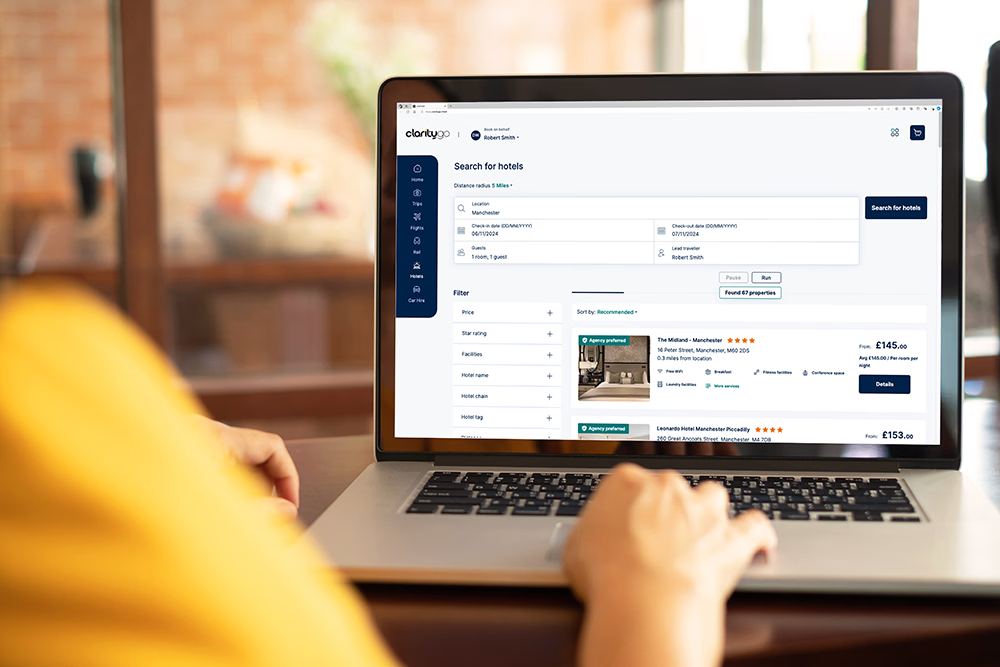
A strong travel management provider should offer an intuitive business travel platform and booking experience that allows travellers to quickly find, compare and book suitable options. Features such as mobile access, real-time itinerary updates and disruption notifications help create a smoother experience while encouraging adoption of the programme.
Evaluate how travel policies are managed
Travel policies play an essential role in controlling spend and ensuring consistency, but managing compliance manually can be difficult.
The best providers build policy guidance directly into the booking process, helping travellers make compliant decisions without creating unnecessary friction. Automated approval workflows and configurable travel rules can significantly reduce administrative workloads while giving organisations greater confidence that bookings align with company requirements.
Equally important is flexibility. As businesses grow and priorities change, travel policies often need to evolve. A provider should make those adjustments straightforward rather than creating additional complexity.
Look beyond booking capability
While access to flights and hotels is a fundamental requirement, organisations should assess the breadth and quality of travel content available through a provider.
A comprehensive programme should support air, rail, accommodation and car hire bookings across domestic and international markets. Broad inventory gives travellers more choice while helping organisations balance convenience, compliance and cost.
The objective is not simply to offer more options. It is to ensure employees can access the most appropriate options for their journey while supporting wider business objectives.
Understand how the provider helps reduce costs
Cost savings remain one of the most common drivers behind investing in a managed travel programme, but the most effective providers deliver value in ways that extend far beyond booking fees.
Strong providers actively help organisations identify opportunities to optimise travel spend through negotiated supplier agreements, spend analysis and strategic recommendations. They provide the data and expertise needed to understand where budgets are being used effectively and where improvements can be made. Here's a great DHL case study example of where savings and value can be delivered.
When evaluating providers, businesses should look for evidence of how savings are achieved and how those savings can be sustained over time rather than relying solely on headline pricing.
Prioritise support when travel disruptions occur
The true value of a travel management provider is often revealed when travel plans don't go according to schedule.
Flight cancellations, rail strikes, severe weather and last-minute itinerary changes can quickly become stressful for travellers and disruptive for businesses. Access to reliable support during these moments can significantly reduce the impact on productivity and employee wellbeing.
Organisations should consider not only whether support is available around the clock, but also the quality and responsiveness of that support when travellers need assistance most.
Consider duty of care responsibilities
Duty of care has become an increasingly important aspect of corporate travel management.
Businesses have a responsibility to understand where employees are travelling and to provide support when circumstances change unexpectedly. Travel management providers can assist with this responsibility through traveller tracking, risk monitoring and emergency support services that help organisations maintain visibility and respond quickly when needed.
As employee wellbeing continues to rise up the business agenda, duty of care solutions should be considered a core requirement of any travel programme.
Assess reporting and insight capabilities
Every business trip generates valuable data. The challenge is turning that information into meaningful insight.
A strong travel management provider should provide extensive travel reporting and analytics to help organisations gain a clearer understanding of travel spending, supplier usage and traveller behaviour. Effective reporting can identify areas where policy compliance may be improving or declining and highlight opportunities to drive greater efficiency across the programme.
For many organisations, the insights generated through reporting become just as valuable as the travel booking services themselves.
Choose a provider that can grow with your business
Travel requirements rarely remain static. Organisations may expand into new markets, open additional offices or introduce new travel policies as they grow.
A provider should be capable of supporting these changes without requiring a complete overhaul of the travel programme. Scalability, flexibility and a proven ability to support organisations through periods of growth should all be important considerations during the selection process.
Choosing a provider with a long-term outlook can help future-proof your travel programme and reduce the need for disruptive changes later.
The right travel management provider should be a strategic partner
The best corporate travel management providers do far more than arrange travel. They combine technology, expertise, traveller support and actionable insights to help organisations achieve their commercial objectives while delivering a positive travel experience.
When comparing providers, organisations should evaluate traveller experience, policy management, cost control, duty of care, reporting and scalability as part of a broader assessment of long-term value.
Many organisations find the greatest benefits come from working with a provider that takes a consultative approach, helping to continuously improve programme performance rather than simply processing bookings. Exploring real-world customer success stories can provide valuable insight into what this partnership looks like in practice and the results that can be achieved.
The right travel management partner is not simply the one that can book travel, but the one that can help manage travel more strategically.