
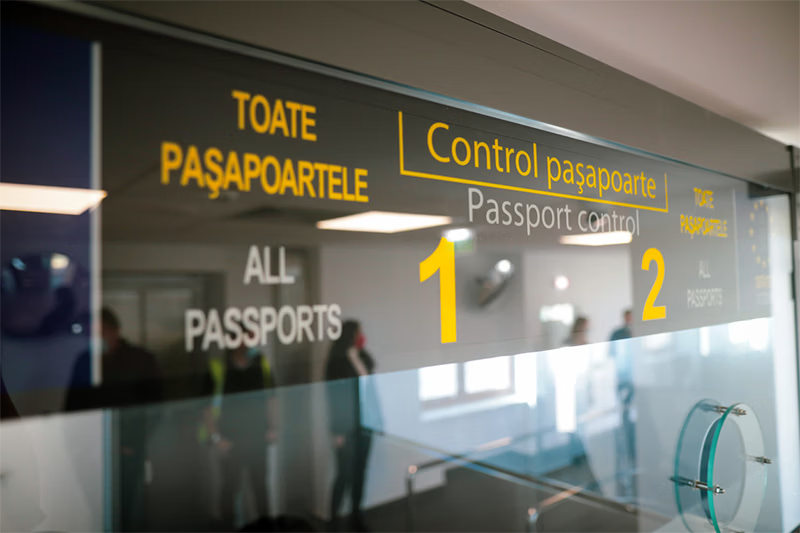
The reported delay to the introduction of the European Travel Information and Authorisation System (ETIAS) will prompt mixed feelings across the travel industry. Some may view it as another setback in Europe's border modernisation journey, but there’s also a strong argument that taking extra time now could help deliver a better outcome for travellers in the long run.
The original vision behind ETIAS was both sensible and necessary. As international travel volumes continue to grow, governments are looking to strengthen security while creating more efficient and predictable border experiences. ETIAS, alongside the Entry/Exit System (EES), forms part of a broader move towards a more digital, connected and secure travel environment.
In principle, that's a positive direction. For business travellers, a well-functioning digital border system should reduce uncertainty, provide greater visibility of travel requirements and support more seamless international journeys.
Over the past year, attention has rightly focused on the rollout of EES. Introducing a major new border process across multiple countries, airports and transport hubs is a significant operational undertaking and it's understandable that there has been a period of adjustment as infrastructure and processes adapt.
Against that backdrop, introducing ETIAS before EES is fully established may have risked creating additional complexity for travellers and border authorities. For those travelling for work, even minor disruptions can have a disproportionate impact. Lost time at border controls can affect meeting schedules, event attendance and overall productivity, while uncertainty around travel requirements can create unnecessary stress for travellers and travel managers.
The reported delay should therefore be viewed less as a pause in progress and more as an opportunity to strengthen the foundations. Successful travel programmes often rely on consistency and predictability, and large-scale border changes are most effective when travellers understand what's expected of them and systems are operating confidently behind the scenes.
Looking ahead, ETIAS remains an important part of Europe's long-term travel landscape. Businesses should use this additional time to familiarise themselves with the future requirements and ensure travellers remain informed about how border processes are evolving.
At Clarity, we work closely with our customers to help them navigate these changes. That means providing clear guidance, timely communications and practical support so travellers can focus on their journey rather than the administration behind it.
Ultimately, the goal should be to introduce new border systems that deliver the experience they were designed to create. In this case, a secure, efficient and predictable system. Taking the time to get implementation right may prove just as important as the technology itself.