
Business travel has changed significantly over the last decade. Organisations are no longer looking for a provider that can simply book flights, hotels and rail tickets. They need a partner that can bring together technology, traveller support, reporting, sustainability and strategic expertise to help them manage increasingly complex travel programmes.
As a result, the definition of a leading B2B travel solutions provider has evolved. Scale remains important, but businesses are increasingly evaluating providers based on their ability to deliver measurable value, improve traveller experiences and provide the visibility required to make informed decisions.
Why leadership in business travel matters
Selecting the right travel management partner can have a significant impact on both operational effectiveness and financial performance.
A leading provider should be able to support every stage of the travel journey, from planning and booking through to reporting, traveller wellbeing and programme optimisation. Businesses need confidence that their provider can adapt to changing market conditions while continuing to deliver value, service and innovation.
For procurement teams, travel managers and finance leaders alike, choosing an established and experienced provider can provide reassurance that the travel programme is built on strong foundations.
Scale is only part of the story
Market position remains an important indicator of a provider's capability and experience.
Clarity Business Travel is ranked as the 8th largest travel management company in Europe and the 5th largest travel management company in the UK, demonstrating both scale and market presence within a highly competitive industry.
This position reflects a business that manages more than five million travel transactions annually, supports organisations across a broad range of sectors and continues to invest heavily in the future of business travel.
For many organisations, scale delivers practical benefits that extend beyond revenue figures. Larger providers are often able to invest more heavily in technology, maintain stronger supplier relationships and provide greater resilience during periods of disruption.
Businesses looking to understand the wider market may also find value in reviewing the annual Business Travel News Europe Leading TMCs rankings, which remain one of the industry's most recognised benchmarks.
Technology has become a key differentiator
The expectations of business travellers continue to evolve. Employees increasingly expect the same ease of use they experience when booking personal travel, while organisations require visibility, control and policy compliance.
This is why technology has become one of the most important factors when evaluating a travel management provider.
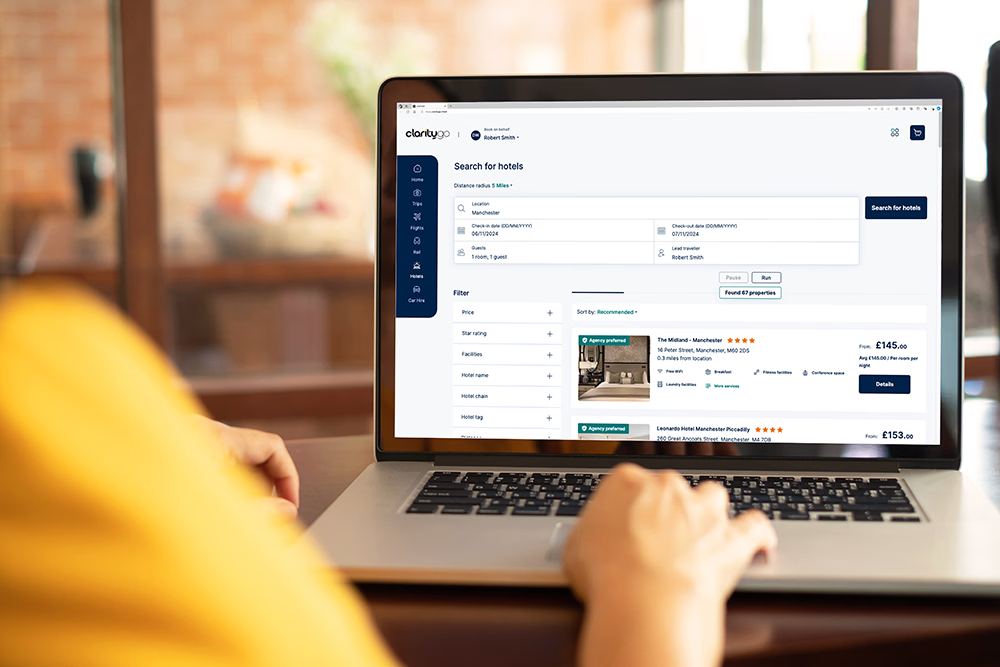
Rather than operating as a standalone booking tool, modern travel technology should support the entire travel ecosystem. This includes booking, approvals, reporting, traveller tracking and disruption management, all working seamlessly together to improve the traveller experience and help organisations maintain control.
At Clarity, our approach centres on ClarityGo and our wider proprietary technology ecosystem, which has been developed to provide a connected experience rather than relying solely on disconnected third-party solutions.
The most effective technology should make travel management feel simpler, not more complicated.
Data should drive better decisions
Travel programmes generate vast amounts of information, but data only becomes valuable when it can be translated into meaningful action.
Leading providers help organisations move beyond reporting for reporting's sake. They provide insights that support better decision-making, highlight opportunities for cost control and identify patterns that may otherwise go unnoticed.
This is where solutions such as Clarity Insights and broader travel reporting and analytics capabilities become increasingly important. Whether organisations are reviewing traveller behaviour, supplier performance or policy compliance, access to actionable data can significantly improve programme performance.
Businesses that use data effectively are often better positioned to respond to changing economic conditions and demonstrate the value of their travel programme internally.
Industry expertise still matters
While technology is important, expertise remains equally valuable.
Different sectors face different travel challenges. A public sector organisation has different requirements to a professional services firm, while an entertainment production travelling globally will have very different priorities to a higher education institution.
A leading travel provider should understand these nuances and adapt their approach accordingly.
Clarity supports organisations across sectors including government, healthcare, education, financial services, construction, media and entertainment, manufacturing and retail. This breadth of experience allows travel programmes to be tailored to the realities of each organisation rather than taking a one-size-fits-all approach.
Businesses should look for evidence of sector expertise through customer success stories, outcomes and long-term client partnerships rather than marketing claims alone.
Traveller wellbeing and sustainability are becoming business priorities
Travel programmes are increasingly measured against a broader set of objectives than cost alone.
Organisations are placing greater emphasis on traveller wellbeing, accessibility and sustainability as part of wider ESG commitments. As expectations continue to grow, travel providers must be capable of helping businesses balance commercial objectives with social and environmental responsibilities.
Key considerations often include:
- The availability of traveller wellbeing services and duty of care support.
- Access to meaningful sustainability reporting and carbon data.
- Demonstrable commitments to accessibility and inclusive travel.
- Support for broader organisational ESG goals.
Clarity's recent accessibility accreditation and continued investment in sustainability initiatives reflect the growing importance of these areas within modern travel programmes.
Strong partnerships create stronger travel programmes
The most successful travel programmes are rarely built on technology alone.
They are created through collaboration between organisations and travel partners that understand their objectives, challenges and long-term ambitions.
This is particularly important when businesses are navigating periods of change, whether that involves growth, mergers, changing travel policies or evolving traveller expectations. Providers should be capable of offering strategic guidance, not simply transactional support.
This consultative approach is often what separates a travel supplier from a genuine travel management partner.
Industry presence demonstrates commitment
Leadership within business travel is also reflected through active participation in the industry itself.
Companies that contribute to industry conversations, invest in innovation and engage with travel buyers often play a meaningful role in shaping the future of the sector.
Events such as Business Travel Show Europe bring together buyers, suppliers and industry experts to explore emerging trends, technologies and challenges across the corporate travel landscape. A strong presence at these events can demonstrate both market credibility and a commitment to continual improvement.
For travel buyers evaluating potential partners, industry engagement can provide useful context alongside technology, service and commercial considerations.
Choosing the right B2B travel solutions provider
There is no single factor that defines a leading B2B travel provider.
Financial performance, technology, sector expertise, traveller support, sustainability and long-term client outcomes all contribute to the overall picture. The strongest providers are those that successfully bring these elements together to help organisations achieve their goals while delivering a consistent and positive traveller experience.
Ultimately, businesses should look beyond booking capabilities and focus on the broader value a provider can deliver. The right partner will not only help manage travel today but will also provide the expertise, technology and strategic guidance needed to support future growth.